توضیحات
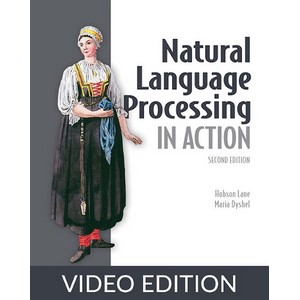
دوره Natural Language Processing in Action, Second Edition, Video Edition. این دوره به شرکتکنندگان کمک میکند تا مهارتهای پردازش زبان طبیعی (NLP) را از پایه با استفاده از ابزارهای متنباز پایتون، ترنسفورمرها، Hugging Face و مدلهای زبان بزرگ (LLM) توسعه دهند. در این ویرایش جدید، شما با تکنیکهای پیشرفتهای مانند BERT، ترنسفورمرهای Hugging Face و فریمورکهای ساخت چتبات آشنا میشوید و یاد میگیرید چگونه ابزارهایی برای تشخیص اخبار جعلی، فیلتر هرزنامه، بهبود نتایج جستجو و ارزیابی صحت مدلهای زبانی بسازید. همچنین، روشهای بهینهسازی LLMها، از جمله طراحی مکالمهای و خودکارسازی آزمون و خطا را فرا خواهید گرفت. با پیشرفتهای اخیر در یادگیری عمیق و ابزارهایی مانند spaCy و PyTorch، این دوره شما را برای ایجاد برنامههای کاربردی NLP، از دستیارهای نوشتاری تا ترجمه و جستجوی پیشرفته، بدون وابستگی به مدلهای تجاری آماده میکند. این ویرایش بهروزرسانیشده شامل مباحثی مانند تنظیم دقیق مدلهای زبانی و استفاده از ترنسفورمرهاست و راهحلهای عملی برای چالشهای دنیای واقعی ارائه میدهد.
آنچه فرا خواهید گرفت
- پردازش، تحلیل، درک و تولید متن زبان طبیعی.
- ساخت خطوط لوله (pipelines) NLP با کیفیت تولید با spaCy.
- ساخت شبکههای عصبی برای NLP با استفاده از Pytorch.
- استفاده از ترنسفورمرهای BERT و GPT برای نگارش انگلیسی، نوشتن کد و حتی سازماندهی افکار.
- ایجاد چتباتها و دیگر عوامل AI مکالمهای.
این دوره مناسب افرادیست که
- برنامهنویسان متوسط پایتون که با اصول اولیه یادگیری عمیق آشنا هستند.
مشخصات دوره Natural Language Processing in Action, Second Edition, Video Edition
- ناشر: Oreilly
- مدرس: Cole Howard, Maria Dyshel, Hobson Lane, Hannes Hapke
- سطح آموزش: مبتدی تا پیشرفته
- مدت زمان آموزش: 22 ساعت و 15 دقیقه
سرفصل های دوره
- Part 1: Wordy Machines: Vector Models of Natural Language
- Chapter 1: Machines That Read and Write: A Natural Language Processing Overview
- The magic of natural language
- Applications
- Language through a computer’s “eyes”
- Building a simple chatbot
- A brief overflight of hyperspace
- Word order and grammar
- A chatbot natural language pipeline
- Processing in depth
- Natural language IQ
- Test yourself
- Summary
- Chapter 2: Tokens of Thought: Natural Language Words
- Beyond word tokens
- Improving your vocabulary
- Challenging tokens: Processing logographic languages
- Vectors of tokens
- Sentiment
- Test yourself
- Summary
- Chapter 3: Math with Words: Term Frequency–Inverse Document Frequency Vectors
- Vectorizing text DataFrame constructor
- Vector distance and similarity
- Counting TF–IDF frequencies
- Zipf’s law
- Inverse document frequency
- Using TF–IDF for your bot
- What’s next
- Test yourself
- Summary
- Chapter 4: Finding Meaning in Word Counts: Semantic Analysis
- The challenge: Detecting toxicity
- Reducing dimensions
- Latent semantic analysis
- Latent Dirichlet allocation
- Distance and similarity
- Steering with feedback
- Topic vector power
- Equipping your bot with semantic search
- Test yourself
- Summary
- Part 2: Deeper Learning: Neural Networks
- Chapter 5: Word Brain: Neural Networks
- An example logistic neuron
- Skiing down the error slope
- Test yourself
- Summary
- Chapter 6: Reasoning with Word Embeddings
- Applications
- Word2Vec
- Word2Vec alternatives
- Test yourself
- Summary
- Chapter 7: Finding Kernels of Knowledge in Text with CNNs
- Convolution
- Morse code
- Building a CNN with PyTorch
- PyTorch CNN to process disaster toots
- Test yourself
- Summary
- Chapter 8: Reduce, Reuse, and Recycle Your Words: RNNs and LSTMs
- Predicting nationality with only a last name
- Backpropagation through time
- Remembering with recurrent networks
- Predicting
- Test yourself
- Summary
- Part 3: Getting Real: Real-World NLP Applications
- Chapter 9: Stackable Deep Learning: Transformers
- Filling the attention gaps
- Bidirectional backpropagation and BERT
- Test yourself
- Summary
- Chapter 10: Large Language Models in the Real World
- Generating words with your own LLM
- Giving LLMs an IQ boost with search
- Test yourself
- Summary
- Chapter 11: Information Extraction and Knowledge Graphs
- First things first: Segmenting your text into sentences
- A knowledge extraction pipeline
- Entity recognition
- Coreference resolution
- Dependency parsing
- From dependency parsing to relation extraction
- Building your knowledge base
- Finding answers in a knowledge graph
- Test yourself
- Summary
- Chapter 12: Getting Chatty with Dialog Engines
- Making sense of the user’s input: Natural language understanding
- Generating a response
- The generative approach
- Chatbot frameworks
- Maintaining your chatbot’s design
- Evaluating your chatbot
- Test yourself
- Summary
- Appendices
- Appendix B: Playful Python and Regular Expressions
- Working with strings
- Mapping in Python: dict and OrderedDict
- Regular expression
- Style
- Mastery
- Appendix C: Vectors and Linear Algebra
- Matrices
- Tensors
- Diving deeper into linear algebra
- Appendix D: Machine Learning Tools and Techniques
- How fit is “fit”?
- Model optimization
- Model evaluation and performance metrics
- Pro tips
- Appendix E: Deploying NLU Containerized Microservices
- Problem statement and training data
- Microservices architecture
- Running and testing the prediction microservice
تصاویر دوره

نمونه فیلم دوره
راهنمای نصب
پس از Extract، با Player دلخواه خود مشاهده کنید.
زیرنویس: ندارد
کیفیت: 720p
لینک دانلود
گذرواژه فایل(ها): www.downloadly.ir
حجم فایل
3.8 گیگابایت